
for all we know
on a generosity of information and uh, closing the library briefly

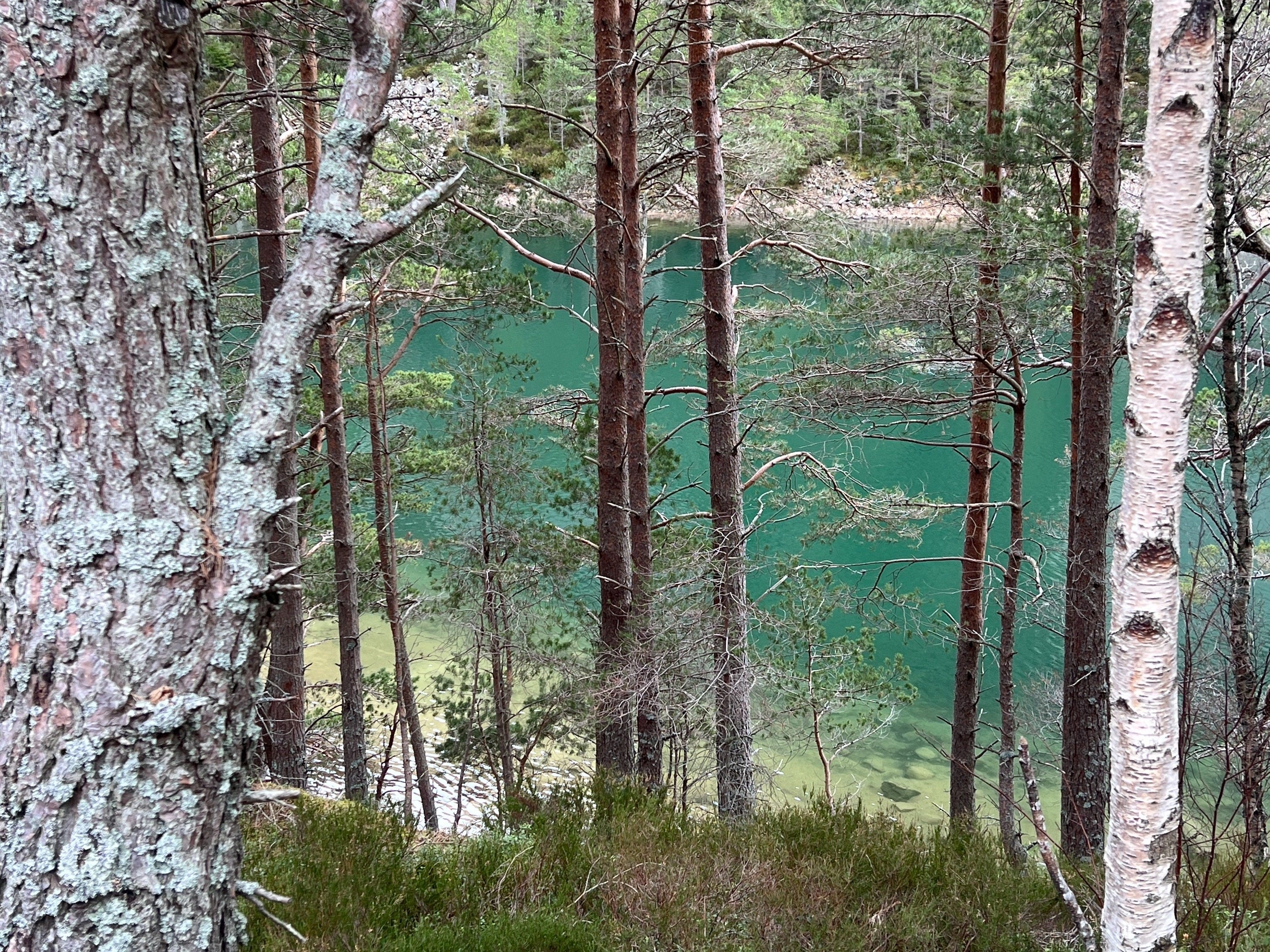
Did you know that the collective name for the teal duck is “a spring of teal”? I have nothing more to add to that for now, but didn’t want it to go unshared.
***
One of the lines from Looking Down at the Stars that people most often quote back to me isn’t one that I wrote. It is, of no surprise to me, the pearl of wisdom dropped by a friend after a particularly special and equally ordinary swim. “Everything else is nonsense”. Sitting on my couch, one hour into redesigning a poster that I didn’t need to touch for even one second, I looked up and saw a red sun setting into motionless Shirley Temple water. I’ve barely looked at the sea since I stopped photographing it daily on February 28 and, since I do swear by P’s words, I wonder what on earth I’ve been doing instead. I have in many ways failed to notice the seasons changing. I have been a bad nature writer, a lazy artist, a distracted friend. Nonsense.
I’d hoped to send this update sooner but I’ve been busy not looking at the sea. It’s a note to say that things, at least in-person things, from the library will be quiet over the next couple of months because on Monday I’ll arrive at the Saari Residence in Finland as part of the 2026 NAARCA residency exchange. The Saari Residence is home to its own ecological library and a big part of what I’m planning to look at there is the collecting and sharing and holding and evolution of knowledge, particularly in non-human communities and relationships. In preparation, I read Dandelions by Thea Lenarduzzi:
A story on the radio the other day: a species of bird in Australia, the regent honeyeater, is threatened with extinction because its numbers have dropped so low that it neither recognises nor knows how to sing its own song. It simply doesn’t hear it often enough; there’s no opportunity to learn. Instead, it copies the calls of other more populous birds, but none of these are suitable mates. The situation is desperate. A project has been launched. Regent honeyeaters in captivity are played recordings of the song, in a language school of sorts. ‘This species,’ the radio presenter said, has ‘forgotten it’s song. But as individuals, they never knew it in the first place.
so now I’m wondering what knowledge is being lost day by day, to what species, by what means, and with what terminality? The CEO of OpenAI, Sam Altman, recently said that he sees a future where information is sold to us as a utility, like water or electricity. By people like him, we can assume. Last week I was watching the second greatest thing every filmed, beaten only by Peter Jackson’s The Lord of the Rings, which is the appendices of Peter Jackson’s The Lord of the Rings. As I readied myself for the section ‘Designing Middle Earth’ detailing the craftsmanship, camaraderie and eventually, through the absurdly steep learning curve these three movies required, world-renowned skill of the special effects team, I’m required first to watch an advert. “So you wanna start a business?”, the actor Walton Goggins asks me. Not particularly, Walton. Nevertheless, he continues. “You might think you need a ton of people and some fancy tech skills, but you don’t”. Apparently this company’s new AI tools will make me “look like I know what I’m doing” which, from his excited tone, I’m led to believe is what he thinks I want. I’m not saying that we must never blag our way through a task, must always know what we’re doing, and must always be entirely honest when we don’t (though surely on the whole, we should be at least leaning towards the latter). I did once take on an illustration job thinking it was a photography job and decided just to roll with it. But in order to complete that job, I still had to learn how to draw. Over time, with effort, and a pen in my hand. I don’t think this tool Goggins is selling me would teach me much and, to state the obvious but for the sake of ensuring we’re offering alternatives, or at least throwing ideas out there when we say ‘don’t do that’, there is good number of designers and developers out there who are eager to help entrepreneurs start their own business, particularly those working at entry-level who need exactly this kind of job to move to more skilled positions that aren’t as affected by AI yet. Swathes of opportunities to learn are being swept out from under our feet across so many sectors (all sectors? I’m not sure, my mum has said for as long as I can remember that hair salons will always be safe from robots). I don’t know enough about this industry to go on any further, I’m just wondering how much we’re unlearning, and why we’re being encouraged to know less.
We all see different futures. Ask any person on the street to envision the future and a scenario unique to them will play out, but they’ll all coalesce into particular themes. Euphoric, mysterious, comedic, communities coming together or being torn apart. Dystopian. Utopian. (And one person’s former could be the other’s latter.) Altman’s future isn’t one I’d like to see. It serves an astonishingly small number of people. It is the anti-library. I’d like to see a future filled with libraries continuing to throw information out into the world for free. Fill up a room, open the door and say ‘please, take it’. Propel it from the windows into the arms of all who can catch it. Watch it bloom from the ground to be plucked by eager hands or eventually decompose, enriching the earth with all it knows.
IX.
The library of Alexandria, if indeed it existed beyond anecdote, most likely mouldered, rather than smouldered. We can say that Sappho’s works then were decomposed.
You Burn Me, Iona Lee (from her collection Anamnesis)
Earlier this week I was speaking to two artists whose work resonates so deeply with The Nature Library that our conversation is still furiously looping through my head, in particular an idea of a ‘generosity of information’. It comes a couple of weeks after two good friends of mine, celebrating their fifteenth wedding anniversary, were described as being ‘generous with their love’. It too, weeks on, remains hovering near the surface each day. Meanwhile the hoarders of wealth are also hoarding intelligence. I’ll resist assuming how generous they are with their love.
I look up the purpose of a library. Not its etymology or dictionary definition, but broadly how it’s described across the board. Princh, a platform I’d never heard of which locates users to a nearby printer (if I’m honest, probably the primary reason I visit my own local library) describes libraries as offering “past and present information that help and equip patrons with explicit knowledge hence assisting to articulate and handle issues in the future.” To equip us with explicit knowledge. Capable of articulating and handling issues in the future. To help us know what we’re doing. To offer us knowledge, and trust us to know what to do with it.
XI.
Writing implies faith in a future – time being the substance of which it is made.
These days, the library is endless, and all the books are writing themselves.
But even data is vulnerable to rot.XII.
Kindle the fire, and it will burn.
You Burn Me, Iona Lee (from her collection Anamnesis)
The Nature Library news
With the residency at Saari followed by a personal trip, The Nature Library’s space in Irvine will be essentially closed over spring, however it might still be possible to pop in and browse the books in my absence, so please keep getting in touch about visiting, and look out for news of some new things happening at 122B Montgomery St. (I realise I’m going on about a generosity of information and then closing the library. Visit your local library, email with any questions or for any recommendations, and actually if you don’t have a local library because it also closed, can you let me know please.)
Dear Library, an exhibition at the National Library of Scotland which The Nature Library is part of alongside the incredible Glasgow Women’s Library, Skye Zine Library and more, remains on display until April 25th and I highly recommend you go.
Feminist Librarianship: Principles, Practices and Provocations by Kirsten MacQuarrie is out later this month with a small contribution from The Nature Library in the form of some some eco-feminist favourites from library’s shelves.
general news
It’s both an honour and a shock that Looking Down at the Stars has been longlisted for the Highland Book Prize. When I was shuffling to my desk in my pyjamas to attend to my morning to-do list of ‘write about scallops’ I didn’t for a second think it would go anywhere. Thank you to anyone who’s read it, recommended it, reviewed it, or thought about doing any of those things. If you do I hope you find something in it that you enjoy.
Earlier this month I ran a spring zinemaking workshop at The National Library of Scotland, filled with springing hives and hares and newts and the hedgerow as a community of its own, and last weekend saw a seaweed cyanotype workshop at St Andrews Botanic Garden as part of their Treasures of the Deep programme. I would love to keep doing more like this, get in touch at thenaturelib@gmail.com if that’d be of interest to you. (And since I’ll be away for a bit, online workshops would be great and I’ve got some of those to announce soon, too.)
The colour of the sea in February has been documented. Flaked pearl, brushed blue suede, melted mist. A reminder of all the ways every day is different because every day the colour of the sea is different. A day might begin with teal, and that day will inevitably unfold with a different cadence than one which begins a leaden grey. Later in the year these photographs will become a new edition of An Index of the Colour of Water.


book of the month
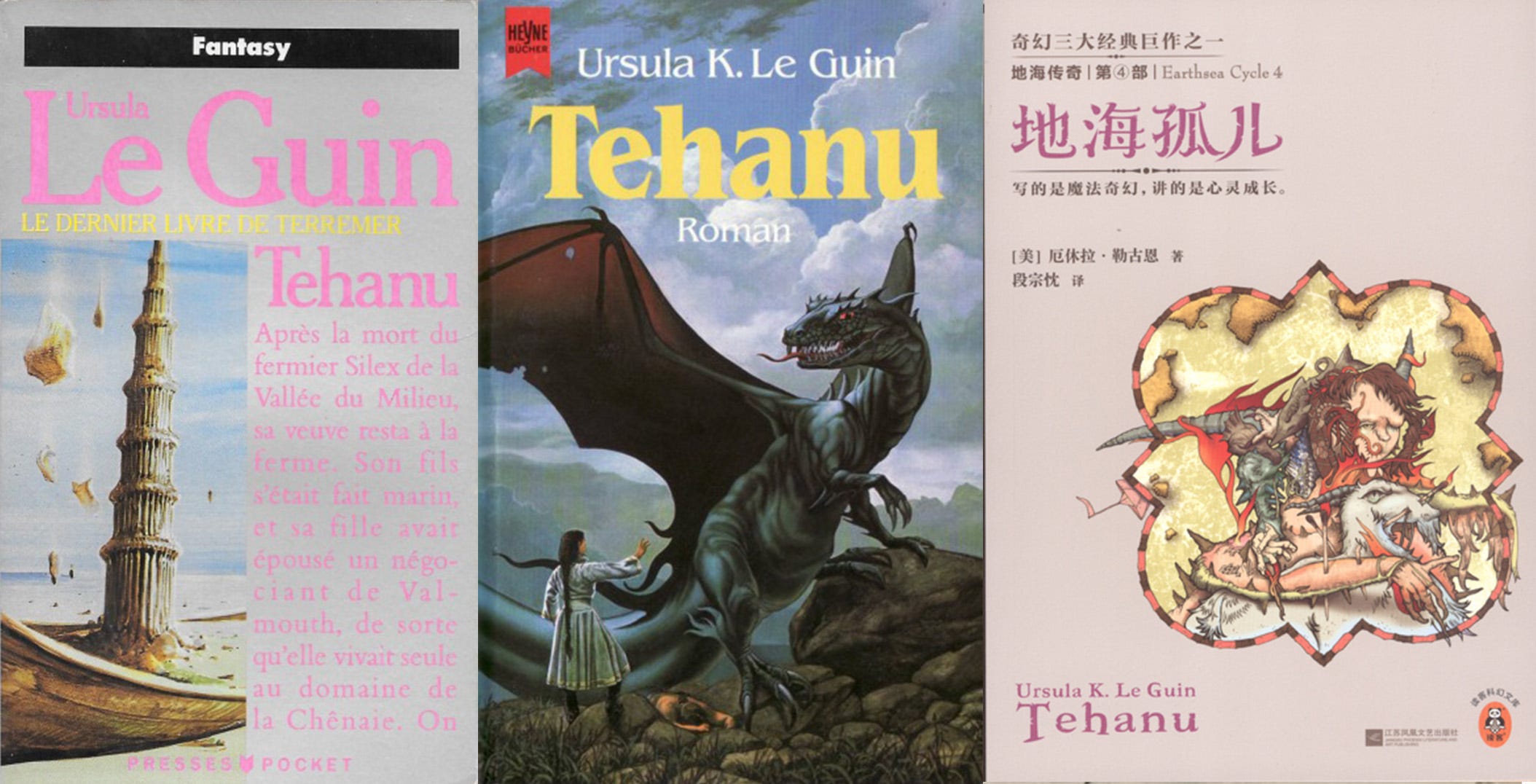
I stumbled upon this website where you can view all covers of a particular science fiction novel, hope you like it.
The bittersweet reality of coming to the end of Ursula K Le Guin’s Earthsea series, which I eked out best I could. Le Guin wrote openly about looking back at her past work and how she might have written it differently if she could, from the way she used ‘he’ as the catch-all pronoun in her gender explorative The Left Hand of Darkness to choosing a male protagonist for her (pre-Hogwarts) boy wizard series, Earthsea. She couldn’t rewrite Left Hand but what she could do, and did do, was write a fourth and final book set in her world of Earthsea to explore the patriarchal and misogynistic systems of our own.
By the time I wrote [Tehanu] I needed to look at heroics from outside and underneath, from the point of view of the people who are not included. The ones who can’t do magic. The ones who don’t have shining staffs or swords. Women, kids, the poor, the old, the powerless. Unheroes, ordinary people—my people. I didn’t want to change Earthsea, but I needed to see what Earthsea looked like to us.
song/book
Last month I saw Belle & Sebastian play in the town hall where our local library is housed and where I browse the monthly car boot sale. They played their 1996 debut Tigermilk in full, so here is We Rule the School paired with Miss Rumphius by Barbara Cooney. One of my favourite children’s books, a tale of “The Lupine Lady” who lives in a house overlooking the sea. She works as a librarian, travels the world, and eventually seeks to complete the one thing her grandfather told her she must do: make the world more beautiful.


Do something pretty while you can
Don't fall asleep
Skating a pirouette on ice is cool
Do something pretty while you can
Don't be a fool
Reading the gospel to yourself is fineWe Rule the School, Belle & Sebastian
You must do something to make the world more beautiful.
Miss Rumphius, Barbara Cooney
found in books
An outlet for sharing the exquisite ephemera of secondhand books. At the start of the month, a visitor picked up the New Naturalist’s Flowers of the Coast by Ian Hepburn and said, ‘Did you know there’s a bus ticket in here?’, and there it was. J & H Caskie’s Bus Services. Little pink ticket to who knows where one day in August who knows when. After she left I flicked through to find some other pages to photograph, and was stopped by a faded flicker of yellow. Adventurer.


Currently reading: Anamnesis, Iona Lee
Watch Everybody to Kenmure Street if you can find a screening near you.
Also watch Cover Up on Netflix.
Write to your Scottish election candidates about the urgent marine protections required in Scotland using Our Seas’ handy template.
Sign to save Trongate 103 and the arts organisations it holds from closure. I was introduced to Iona Lee’s work through her band Acolyte when they performed at the Sharmanka Kinetic Theatre, which is also how I found out that remarkable theatre even existed.
Speaking of generosity of information, read Trasho Biblio’s guide to starting your own DIY library.